
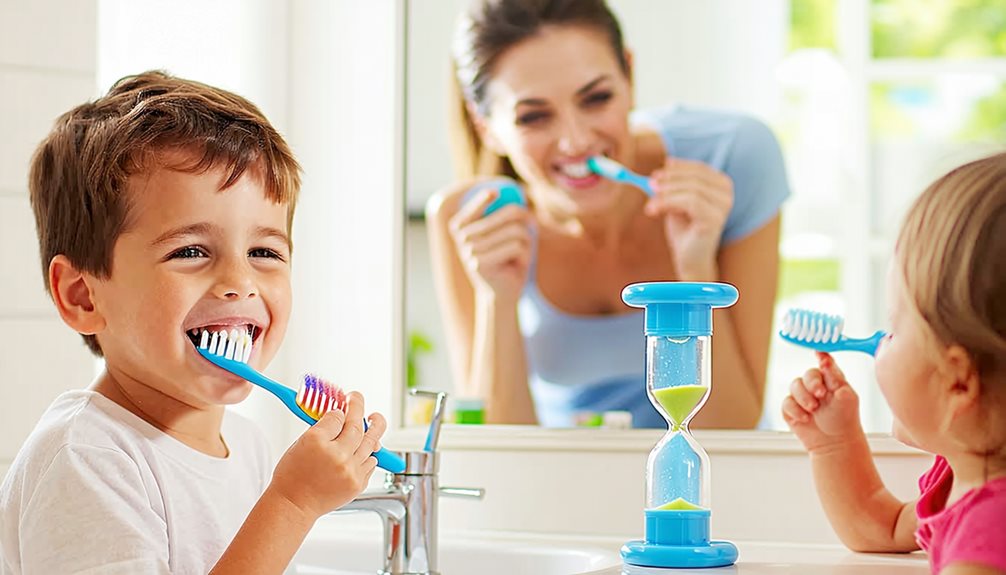
To guarantee excellent oral health in children, start with a consistent brushing routine. Use a soft-bristled toothbrush, engaging them with fun designs, and guide them in gentle circular motions, aiming for two minutes twice a day. Limit sugary snacks and introduce sugar alternatives like xylitol, while promoting healthy snacks such as crunchy fruits. This not only helps prevent tooth decay but also fosters smart lifelong habits. Regular dental checkups are essential, as pediatric dentists create supportive, anxiety-free environments. These visits teach preventive care and encourage a positive relationship with dental health. Explore further to discover more engaging and effective strategies.
Establish a Brushing Routine
Creating a consistent brushing routine is vital for maintaining children’s oral health and instilling lifelong dental hygiene habits. An effective routine begins with the right brushing techniques, guaranteeing that your child covers all areas of their mouth. Encourage gentle circular motions and a 45-degree angle towards the gums to effectively remove plaque. Consistently brushing twice daily for two minutes each time is essential for peak results.
To engage children and make brushing an enjoyable activity, consider incorporating fun toothbrushes into their routine. Toothbrushes featuring their favorite cartoon characters or those that play music can transform the task into an exciting adventure. Additionally, some innovative toothbrushes now offer interactive apps that guide children through proper brushing techniques, providing both entertainment and education.
Parents can further enhance the brushing experience by setting a good example and brushing alongside their children. This shared activity not only emphasizes the importance of oral hygiene but also allows for quality bonding time.
Limit Sugary Snacks
A cornerstone of effective oral health care is moderation, particularly when it comes to sugary snacks. Excessive consumption of sugar can lead to tooth decay, a common concern for children’s dental health. Innovative approaches can help in managing sugar intake, ensuring children maintain a healthier smile.
Introducing sugar substitutes such as xylitol or stevia can be an effective strategy, as they offer a sweet taste without the detrimental effects of sugar on teeth.
In addition to using sugar substitutes, providing children with a variety of healthy snacks can greatly contribute to improved oral health. Crunchy fruits and vegetables, such as apples and carrots, not only satisfy hunger but also stimulate saliva production, which helps in cleaning the teeth naturally.
Encouraging a diet that includes nuts and cheese can further enhance oral health by supplying essential nutrients like calcium and phosphorus, which fortify tooth enamel.
Educating children on making smart snack choices fosters lifelong habits that prioritize their dental well-being. By creatively integrating these practices into daily routines, parents and caregivers can contribute to a future where children maintain vibrant and robust oral health, all while enjoying a diverse range of delicious, yet tooth-friendly, foods.
Schedule Regular Dental Checkups
Regular dental checkups are an important component of maintaining children’s oral health. These visits not only guarantee the early detection of potential issues but also help establish a positive relationship between young patients and their dental care providers.
Pediatric dentists, specialists trained to manage the unique needs of children’s oral health, play a vital role in creating a welcoming environment that can alleviate dental anxiety—a common challenge among young patients.
By scheduling regular appointments, parents can introduce their children to innovative dental care techniques that make visits more engaging and less intimidating. Pediatric dentists employ child-friendly language and tools, transforming the dental experience into an educational journey. This proactive approach fosters a sense of trust and comfort, encouraging children to embrace oral hygiene as a lifelong commitment.
Incorporating regular dental checkups into your child’s routine offers numerous benefits beyond oral hygiene. These visits provide opportunities for children to learn about the importance of preventive care and the latest advancements in dental technology.
Frequently Asked Questions
What Type of Toothbrush Is Best for Children?
When selecting children’s toothbrush types, prioritize those with soft bristles and a small head for effective cleaning and comfort. Toothbrush size recommendations suggest choosing a handle suited to a child’s grip, fostering independence and encouraging consistent oral hygiene habits.
How Can I Make Brushing Fun for My Child?
To enhance the enjoyment of brushing for children, consider using toothpaste flavors that appeal to their taste preferences. Additionally, incorporating brushing songs can transform the routine into an engaging experience, fostering positive oral hygiene habits.
Are Electric Toothbrushes Safe for Young Kids?
Electric toothbrushes are generally safe for young children when used under supervision, offering benefits such as improved plaque removal and ease of use. Prioritizing child dental safety guarantees a positive, innovative approach to developing lifelong oral hygiene habits.
What Are Signs My Child Might Have a Cavity?
Cavity symptoms in children include toothache, sensitivity to hot or cold, and visible holes in teeth. Cavity prevention involves regular brushing, flossing, and dental check-ups. Encouraging innovative oral care routines can greatly reduce the risk of cavities.
How Can I Help My Child Overcome Dental Anxiety?
To alleviate dental anxiety in children, schedule regular dental visits to foster familiarity. Employ positive reinforcement by praising bravery and offering small rewards. This approach, blending consistency with encouragement, cultivates a positive perception of dental care.
Conclusion
Maintaining ideal oral health in children necessitates a structured approach involving three key practices. Establishing a consistent brushing routine helps inculcate lifelong dental hygiene habits, while limiting sugary snacks reduces the risk of tooth decay, contributing to overall oral wellness. Additionally, scheduling regular dental checkups guarantees early detection and management of potential dental issues. Emphasizing these practices fosters a foundation for enduring oral health, underscoring their importance in promoting healthy, confident smiles in children.

