
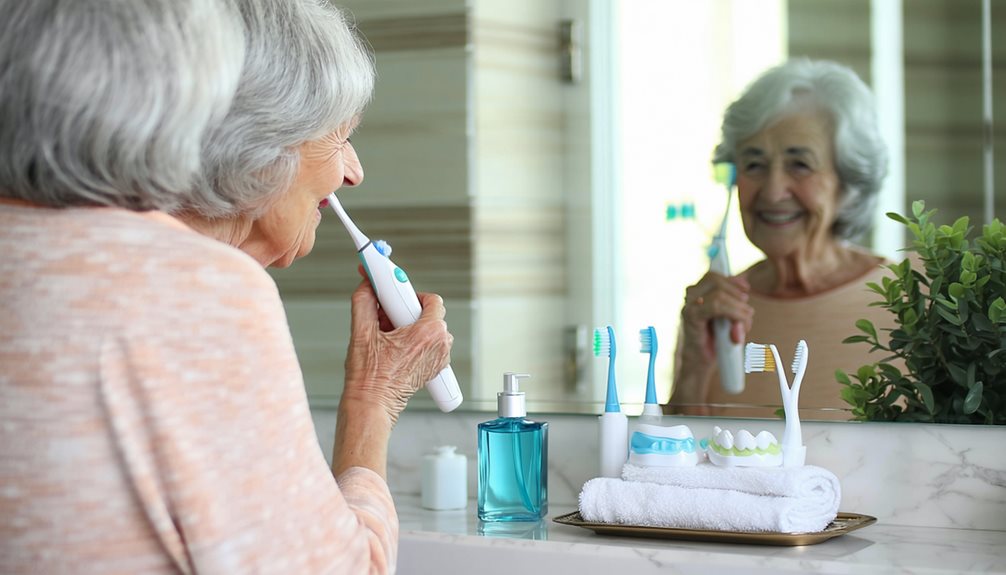
Maintaining ideal oral health in seniors involves regular dental check-ups and tailored oral hygiene practices. Critical measures include the use of soft-bristled or electric toothbrushes to minimize gum abrasion, alongside proficiency in flossing or employing interdental devices suitable for reduced dexterity. Address xerostomia with saliva substitutes and hydration strategies to enhance oral cavity moisture. Proper denture maintenance prevents issues such as sores and infections due to ill-fitting prosthetics. A balanced diet rich in calcium and vitamin D supports periodontal health, while vigilance for dental warning signs aids in early intervention of potential complications. Discover extensive strategies for healthier aging oral care.
Regular Dental Check-Ups
Scheduling regular dental check-ups is essential for maintaining ideal oral health in seniors. These visits provide an opportunity for dental professionals to implement preventive care strategies, critical in mitigating age-related oral health challenges.
With the aging population, there is an increased prevalence of conditions such as periodontal disease, root caries, and xerostomia, which necessitate vigilant monitoring and early intervention. Advanced diagnostic tools and innovative treatment options allow for the thorough management of these conditions, ensuring best oral health outcomes.
Senior education plays a key role during these appointments, empowering patients with the knowledge to maintain oral hygiene effectively between visits. Understanding the correlation between systemic health and oral conditions is fundamental, as it encourages seniors to adopt proactive measures in their daily lives.
Dentists are equipped to tailor preventive care plans that address individual needs, offering guidance on dietary choices, medication side effects, and techniques to enhance daily oral maintenance.
Incorporating cutting-edge practices and technologies, such as digital radiography and intraoral cameras, enhances the efficacy of these check-ups, providing clearer insights into oral health status.
Regular dental visits therefore serve as a cornerstone in the holistic approach to senior oral care, fostering longevity and quality of life.
Daily Oral Hygiene Practices
While regular dental check-ups are integral to senior oral health, effective daily oral hygiene practices form the foundation of long-term dental well-being. The selection of an appropriate toothbrush and the mastery of flossing techniques are paramount to preventing oral diseases and maintaining ideal dental health.
Seniors should prioritize toothbrush selection by opting for soft-bristled brushes that reduce gum abrasion and enhance comfort. Electric toothbrushes are particularly advantageous, offering oscillating and pulsating motions that improve plaque removal.
Implementing ideal flossing techniques is equally critical. Traditional floss may pose challenges for those with dexterity issues; therefore, innovative alternatives like interdental brushes or water flossers can provide effective interdental cleaning. Studies indicate that consistent use of these tools can greatly reduce periodontal disease risks, thereby preserving tooth integrity.
To integrate these practices into daily routines, consider the following recommendations:
- Choose the right toothbrush: Soft-bristled or electric options are recommended for gentle yet thorough cleaning.
- Employ innovative flossing tools: Interdental brushes and water flossers can enhance plaque removal between teeth.
- Commit to twice-daily routines****: Confirm brushing and flossing occur at least twice a day to maximize oral health benefits.
Managing Dry Mouth
Dry mouth, or xerostomia, is a common condition among seniors that can greatly impact oral health and overall quality of life. It often results from decreased salivary gland function due to aging, medications, or systemic conditions. Saliva plays an important role in maintaining oral health by aiding in digestion, providing antimicrobial action, and facilitating speech.
As a result, managing dry mouth effectively is imperative for seniors to preserve their oral health and enhance daily comfort.
One innovative approach to alleviate xerostomia is the use of saliva substitutes, which are designed to mimic natural saliva. These products can help maintain oral moisture and protect mucosal tissues, promoting a more balanced oral environment.
In addition, incorporating specialized mouth rinses into daily oral care regimens can provide symptomatic relief. These rinses are often formulated with ingredients such as xylitol and fluoride, which not only enhance lubrication but also fortify teeth against decay.
Healthcare professionals should guide seniors in selecting appropriate products tailored to their specific needs. Regular dental check-ups are essential to monitor oral health and adjust management strategies accordingly.
Proper Denture Care
Proper denture care is essential for maintaining oral health and comfort in seniors.
Dentures should be cleaned daily using appropriate non-abrasive solutions to prevent plaque buildup and bacterial contamination.
Additionally, ensuring safe storage when not in use and scheduling regular checkups with a dental professional can help identify and address any fit or function issues, thereby prolonging the lifespan of the dentures.
Cleaning Dentures Daily
Maintaining ideal oral hygiene is essential for seniors with dentures, as it prevents oral infections and guarantees the longevity of the dental appliances.
Denture cleaning techniques are significant in safeguarding effective denture maintenance. By employing innovative methods, seniors can enjoy enhanced oral health and prolonged usability of their dentures.
-
Mechanical Cleaning: Utilize a soft-bristled denture brush to gently scrub all surfaces of the denture, guaranteeing the removal of food particles and biofilm. This manual method is critical for the prevention of plaque and calculus accumulation, which can lead to denture stomatitis.
-
Chemical Soaking: Incorporate the use of non-abrasive effervescent denture cleansers. These solutions are designed to eliminate microbial biofilm, providing an antimicrobial effect that complements mechanical cleaning. Always follow manufacturer instructions to avoid potential damage to the denture material.
-
Ultrasonic Cleaners: For those seeking advanced innovation, ultrasonic denture cleaners offer a cutting-edge solution. These devices leverage high-frequency sound waves to dislodge particles and bacteria from the denture surfaces, offering a superior clean compared to traditional methods.
Focusing on these techniques guarantees dentures are maintained in peak condition, reducing the risk of oral infections and promoting overall oral health in seniors.
Storing Dentures Safely
To guarantee the longevity and functionality of dentures, it is essential to implement proper storage techniques. Denture storage plays a significant role in maintaining the structural integrity and hygienic quality of these prosthetic devices. Ensuring dentures remain in ideal condition requires adherence to safe handling protocols.
Begin by rinsing the dentures thoroughly with water to eliminate any lingering food particles or debris. Subsequently, immerse them in a cleansing solution specifically designed for denture care, which aids in the disinfection process.
During periods when dentures are not in use, it is vital to store them in a moist environment to prevent warping. A denture bath or a container filled with water is ideal, ensuring that the dentures are completely submerged. However, it is imperative to avoid hot water, which can distort their shape.
Employing a container with a secure lid is advisable to prevent accidental displacement or contamination.
For those seeking innovative approaches to denture storage, consider storage units with integrated UV light technology, offering an additional layer of antimicrobial protection. This advanced solution aligns with modern aspirations for superior oral health management, ensuring dentures remain both functional and hygienically sound for prolonged use.
Regular Denture Checkups
Prioritize regular denture checkups as an integral component of thorough oral health care for seniors. As the anatomical structures within the oral cavity can change over time, maintaining ideal denture fit is paramount. An ill-fitting denture may compromise both comfort and functionality, potentially leading to complications such as sores or infections that adversely affect gum health.
Furthermore, consistent evaluations by a dental professional can preemptively identify issues that might otherwise progress undetected.
Consider the following key advantages of regular denture checkups:
-
Enhanced Denture Fit: Regular assessments guarantee that prosthetics are properly aligned, reducing discomfort and improving masticatory efficiency.
-
Preservation of Gum Health: Routine checkups facilitate early detection of any signs of inflammation or irritation, which can be promptly addressed to maintain healthy gingival tissues.
-
Adaptation to Anatomical Changes****: As the oral structures evolve, adjustments to dentures can be made to accommodate changes, thereby averting potential complications.
Embracing technological advancements in denture care can further augment these benefits, enabling precision adjustments and personalized care plans.
With regular checkups, seniors can enjoy enhanced oral functionality and improved quality of life, empowering them to engage fully in daily activities without the hindrance of dental discomfort.
Balanced Diet for Oral Health
A balanced diet plays an important role in maintaining ideal oral health for seniors, emphasizing the importance of nutrient-rich food choices.
Essential vitamins and minerals, such as calcium and vitamin D, are critical in supporting dental integrity and reducing the risk of periodontal disease.
Additionally, adequate hydration is essential for oral wellness, as it aids in saliva production, which is necessary for neutralizing acids and washing away food particles.
Nutrient-Rich Food Choices
In pursuing ideal oral health for seniors, a balanced diet rich in essential nutrients is paramount. The integration of superfoods offers myriad benefits, enhancing oral health through improved vitamin absorption and systemic well-being. Superfoods such as kale, blueberries, and almonds are replete with antioxidants, calcium, and other critical nutrients, fortifying teeth and gums against decay and disease.
To optimize oral health, consider the following nutrient-rich food choices:
-
Dairy Products: Incorporating low-fat milk, cheese, and yogurt into the diet can boost calcium intake, essential for maintaining tooth enamel integrity and combating periodontal disease. These foods also facilitate the absorption of fat-soluble vitamins such as Vitamin D, enhancing bone health.
-
Leafy Greens: Spinach and kale are rich in folic acid and calcium, supporting gum health and reducing inflammation. Their high fiber content also stimulates saliva production, which aids in neutralizing acids and cleaning the oral cavity.
-
Nuts and Seeds: Almonds and sesame seeds provide essential fatty acids and antioxidants, promoting healthy gum tissue and reducing inflammation. The mechanical action of chewing these foods can also help in plaque removal, serving as a natural adjunct to oral hygiene practices.
Hydration and Oral Wellness
Adequate hydration is a pivotal component of oral wellness, particularly in the senior population where xerostomia, or dry mouth, is prevalent due to physiological changes and medication side effects.
The hydration benefits for oral health in older adults are profound, as ideal fluid intake supports saliva production, which is essential for maintaining the oral cavity’s moisture retention. Saliva not only lubricates the mouth but also acts as a natural cleanser, reducing the risk of dental caries and periodontal disease.
To innovate in oral care, it is essential to integrate strategies that enhance moisture retention in the oral mucosa. This involves not only recommending adequate water consumption but also considering the role of hydrating foods and beverages rich in electrolytes, which can be instrumental in maintaining systemic and oral hydration levels.
Emerging oral care products that focus on hydrating agents and xerostomia management present a promising avenue for addressing dry mouth symptoms.
Patient-focused care should include personalized hydration plans, incorporating both dietary and lifestyle modifications to guarantee sufficient hydration.
Recognizing Dental Warning Signs
Recognizing dental warning signs is essential for maintaining oral health in seniors, as early detection can prevent more severe complications. As individuals age, the oral cavity undergoes various changes, making it vital to identify symptoms that may indicate underlying issues.
Tooth sensitivity, often resulting from enamel erosion or gum recession, can signal the need for immediate clinical intervention. Seniors experiencing this symptom should consult dental professionals to assess the integrity of their enamel and explore innovative solutions like fluoride treatments or bonding agents.
Gum bleeding is another significant indicator that shouldn’t be overlooked. Frequently associated with gingivitis or periodontal disease, gum bleeding warrants thorough periodontal evaluation. Employing advanced diagnostic tools and minimally invasive procedures can enhance treatment outcomes, ensuring prolonged oral health.
To help seniors recognize and address dental warning signs, consider these key indicators:
- Tooth Sensitivity: Sharp pain or discomfort when exposed to temperature changes.
- Gum Bleeding: Persistent bleeding during brushing or flossing.
- Swelling or Lumps: Unexplained growths or swelling in the oral tissues.
Frequently Asked Questions
How Does Medication Affect Oral Health in Seniors?
Medication side effects can greatly impact oral hygiene in seniors, leading to conditions such as xerostomia (dry mouth) and increased plaque accumulation. These adverse effects necessitate vigilant oral care practices and innovative approaches to maintain ideal dental health.
Can Seniors Use Electric Toothbrushes Effectively?
Seniors can utilize electric toothbrushes effectively, enhancing senior dental hygiene through improved plaque removal and ease of use. Electric toothbrush benefits include superior cleaning efficiency, reduced effort, and adaptability to limited dexterity, supporting innovative oral care solutions.
Are There Natural Remedies for Improving Senior Oral Health?
Natural remedies, such as herbal rinses and coconut oil, can considerably enhance oral health in seniors. Herbal rinses offer antimicrobial properties, while coconut oil pulling aids in reducing plaque and gingivitis, promoting overall oral wellness.
How Do Cognitive Impairments Impact Oral Care for Seniors?
Cognitive impairments, such as memory challenges, can lead to dental neglect in seniors. This neglect often results in deteriorating oral health, as individuals may forget to perform essential dental hygiene tasks, necessitating innovative patient-focused strategies for effective oral care management.
What Are the Best Oral Care Products for Seniors With Arthritis?
For seniors with arthritis, arthritis-friendly toothbrushes featuring ergonomic handles and electric models enhance ease of use. Additionally, oral rinse options formulated for sensitive gums and anti-inflammatory properties offer effective plaque control, promoting thorough dental hygiene.
Conclusion
In summary, maintaining ideal oral health in seniors necessitates adherence to regular dental check-ups, implementation of daily oral hygiene practices, effective management of xerostomia, and meticulous denture care. A balanced diet further supports oral health by providing essential nutrients. Vigilance in recognizing dental warning signs is imperative for early intervention and prevention of complications. By integrating these strategies, seniors can greatly reduce the risk of oral health issues, thereby enhancing overall well-being and quality of life.

